

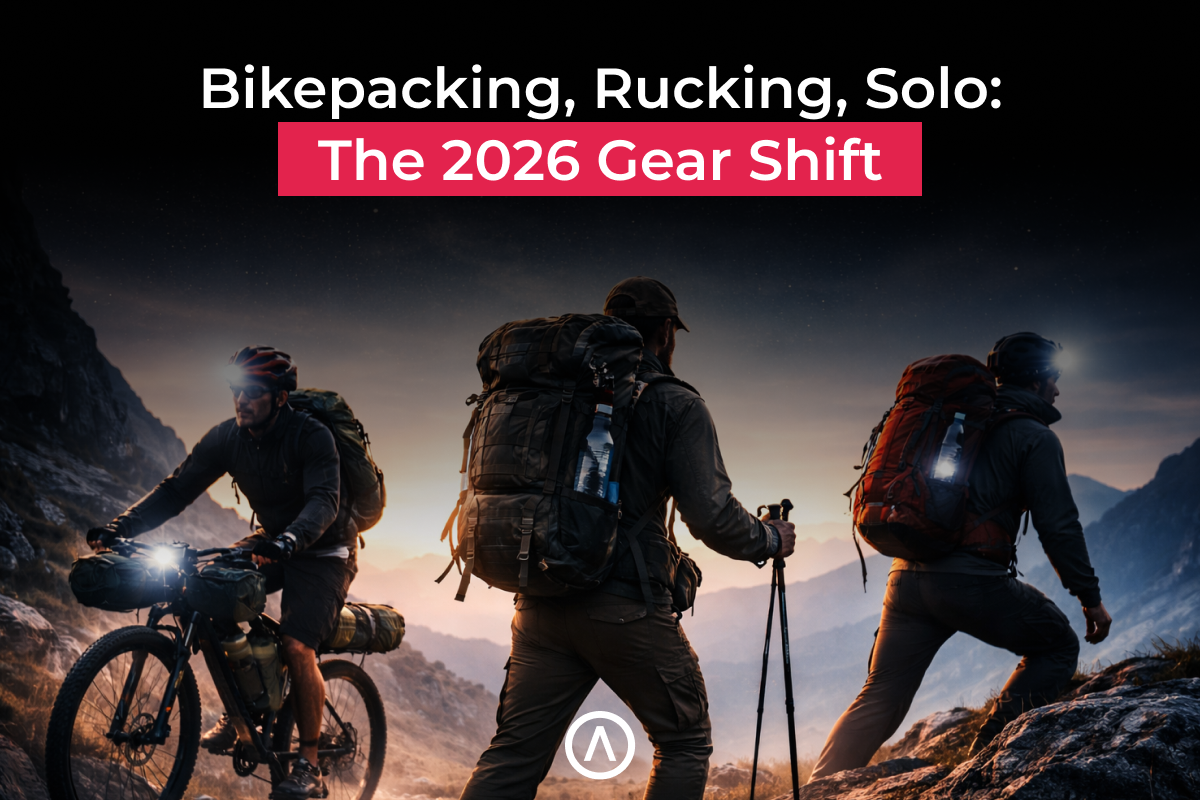
Bikepacking, Rucking, and Solo Adventures: The Outdoor Trends Reshaping Product Demand in 2026
The outdoor customer in 2026 is chasing something simple: freedom with less friction. Shorter trips. Lighter kits. More self-reliance. More “I can do this after work” energy, instead of “I need a week off and a spreadsheet.”
That shift shows up in three clear trend lanes: bikepacking, rucking, and solo adventures. They look different on the surface, but the product implications rhyme: modular gear, safety-forward features, and content that teaches fast.
Key takeaway
- These trends are driven by “accessible adventure,” shorter planning cycles, and solo-friendly experiences, driving demand for gear that is lighter, more versatile, and easier to buy as a complete kit.
- The brands winning demand in 2026 build persona-based bundles (kits for bikepackers, ruckers, solo campers) and publish content that solves the first 10 questions a beginner asks.
- Safety and confidence sell: solo participation is rising, hiking communities are expanding, and outdoor visitation remains strong, making “peace of mind” features and clear setup guidance key drivers of conversion.
Why these three trends matter right now
- Outdoor participation and visitation remain high, including record visitation across the U.S. National Park System in 2024 (331.9M recreation visits). That’s continued pressure on trail systems, campgrounds, and weekend travel patterns.
- Camping keeps broadening, with KOA reporting about 11 million more households camping in 2024 compared to 2019. More households mean more first-time buyers, and first-time buyers lean heavily on “starter kits” and beginner content.
- The community-driven outdoor movement is accelerating: Strava reports that new clubs nearly quadrupled in 2025, with hiking clubs growing fastest. Group activities now drive gear discovery, repeat trips, and word-of-mouth recommendations.
- Solo trips are on the rise: The Dyrt reports that 30.6% of campers spent at least one night alone in 2024. This shift is redefining “must-have” gear, with safety, simplicity, and light weight now top priorities.
Now let’s translate this into what buyers add to cart.
Trend 1: Bikepacking, the gear shift toward self-supported mobility
Bikepacking isn’t new, but in 2026 it’s becoming more mainstream. More riders are assembling weekend-ready setups and gradually upgrading bags and gear.
What shoppers want in 2026 bikepacking gear
1) Carry systems that feel stable and weatherproof
- seat packs, handlebar rolls, frame bags, top-tube bags
- waterproofing, strap security, and bounce reduction become conversion points
2) Power, navigation, and repair confidence
- charging solutions, lights, GPS mounts, multi-tools, tubeless repair, compact pumps
- buyers care about “What happens when something breaks 30 miles out?” even if they never phrase it that way
3) Sleep and shelter that compresses
- packable sleep systems, minimalist shelters, compact cook kits, filtration
Product demand signals to watch
If your search console and ad accounts show rising queries around:
- “bikepacking bag setup”
- “frame bag waterproof”
- “handlebar harness”
- “gravel adventure kit”
…you’re seeing trend demand before it becomes a sales report.
One more reality check: bicycle categories have been dealing with tariff uncertainty and price volatility, which can shift buyers toward accessories and upgrades instead of full bike purchases.
Brand move: build a “Bikepacking Essentials” collection that merchandises by system, not by SKU type. “Carry,” “Sleep,” “Repair,” “Power,” “Weather.” Simple taxonomy sells.
Trend 2: Rucking, functional fitness with outdoor crossover appeal
Rucking combines outdoor activity with fitness: a weighted pack, a steady pace, and an easy entry point. It’s slowly gaining attention in the health world.
What ruckers buy (and re-buy)
1) Packs that carry weight comfortably
- padded straps, load distribution, ventilation
- durable fabrics and stitching, since weight finds weak points fast
2) Footwear, socks, blister prevention
- rucking is repetitive impact; comfort failures show up quickly
3) Hydration and visibility
- hydration reservoirs, bottles, reflective elements, headlamps for early morning or post-work sessions
4) Modular add-ons
- sternum straps, waist belts, internal organizers, rain covers
There’s also a community angle: events and challenges are popping up around the trend, reinforcing repeat participation and gear upgrades.
Brand move: don’t market rucking gear like a military cosplay. Market it like practical training for real outdoor days: carrying water, hauling camp setups, building endurance for bigger trips. Grounded copy converts better.
Trend 3: Solo adventures, confidence-first gear and content
Not every solo adventure is a big undertaking. Sometimes it’s just a quick overnight escape. With more people camping alone, the definition of “must-have” gear is changing—leaning toward products that prioritize ease, confidence, and independence.
What solo customers prioritize
1) Setup speed and simplicity
- shelters that pitch easily, sleep systems that don’t require fiddling, minimal failure points
2) Safety, communication, and navigation
- offline maps and route planning tools are part of the ecosystem, and platform growth supports that behavior shift
- buyers look for clear guidance, checklists, and “here’s how to use this” content
3) Lightweight comfort
- solo shoppers often optimize for weight because there’s no gear-sharing
Brand move: add a “Solo Ready” filter to collections and build bundles that remove decision fatigue: shelter + sleep + light + water treatment + first aid. That bundle structure increases AOV and reduces return risk.
How outdoor brands can respond in 2026 (product + marketing playbook)
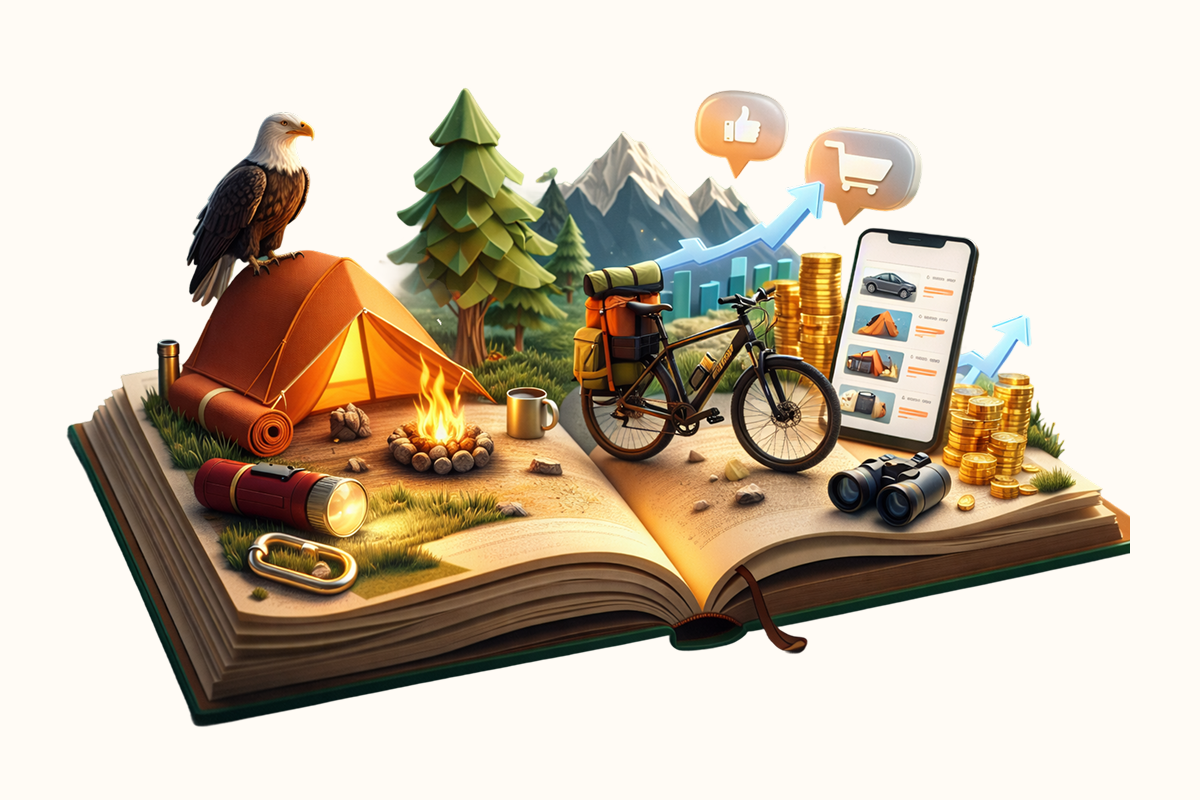
Here’s the playbook our team uses when a trend starts changing demand patterns.
1) Build trend personas, then map them to bundles
- Bikepacker: carry system + repair + power
- Rucker: pack + comfort + hydration
- Solo adventurer: simplicity + safety + lightweight comfort
Bundles can live on DTC, translate into Amazon virtual bundles, and support “starter kit” content.
2) Update PDPs and listings with use-case language
Specs still matter, but buyers convert on outcomes:
- “stays stable on rough gravel”
- “comfortable under load for 60 minutes”
- “fast pitch in bad light”
3) Create beginner content that answers intent, fast
When a trend grows, beginners follow. And beginners ask the same questions every time.
- What size pack do I need?
- How much weight should I start with?
- What’s the minimum safe solo kit?
If your brand doesn’t answer those questions, someone else will.
Beginner-focused content does two things at once: it captures high-intent organic traffic and removes hesitation at the moment of purchase. “Starter kit” pages, simple buying guides, and clear progression paths reduce overwhelm and build trust fast.
The brands that win in bikepacking, rucking, and solo adventures don’t assume knowledge. They make getting started feel simple.
4) Align campaigns to micro-seasons, not just the big ones
These categories don’t only spike during the traditional outdoor season.
Bikepacking interest rises in spring and summer, but also during shoulder-season route planning.
Rucking sees momentum during “new routine” moments—January resets, post-summer fitness shifts, back-to-school structure.
Solo trips often increase around long weekends, holidays, and burnout periods when people want a quick reset.
If you already run seasonal promotions, layer these personas into your calendar. Adjust creative, landing pages, bundles, and email flows to match the moment. Small timing shifts can unlock outsized performance gains.
Frequently Asked Questions
What products are in highest demand for bikepacking in 2026?
Demand centers on carry systems (frame, handlebar, and seat bags), repair essentials, lighting and power solutions, and packable sleep setups. Riders prioritize reliability because confidence comes from gear that performs consistently.
How should outdoor brands market rucking gear without sounding gimmicky?
Focus on comfort, load stability, and safe progression. Show how to start light and build gradually. Educational content grounded in credible guidance performs better than hype, especially with beginners.
Is solo camping actually growing, or is it a social media blip?
Yes. Solo participation continues to rise, and that shift influences what feels essential: lighter gear, simple setup, and products that emphasize safety and independence.
What content should we publish first to capture these trends?
Start with beginner guides and “starter kit” pages for each persona. Then build comparison content (frame bag vs. handlebar bag) and practical checklists. Question-led content supports both SEO and answer engines.
How do we turn trend traffic into sales across DTC and marketplaces?
Create persona-driven landing pages, bundle complementary gear to reduce decision fatigue, and align paid search with high-intent queries. Reinforce with segmented email flows and marketplace PDPs that focus on outcomes, not just specs.
Conclusion: make the trend practical, then make it easy to buy
Bikepacking, rucking, and solo adventures are growing because they fit modern life: less planning, more repetition, and more self-directed confidence.
The opportunity for brands is clear:
- build systems and bundles that reduce decision fatigue
- write product pages that sell outcomes before specs
- publish beginner-first content that captures intent early
- align campaigns to persona-driven micro-seasons
If you want to map these trend personas to your catalog, SEO strategy, and conversion funnel, and turn them into measurable growth across DTC and marketplaces, book a call with our team.
Are you ready to grow?
At Algofy Outdoors, we partner with amazing outdoor brands to provide 360° digital marketing solutions.
.png)
.png)
