


Seasonal Inventory Management for Winter Outdoor Brands: Stocking Snow Gear Without Getting Buried
You plan, you forecast, then the first storm hits. Suddenly one jacket color vanishes from the shelf, a glove size lingers for months, and cash is tied up in snowshoes that never got their moment. Winter is a short season, so every cycle counts. The goal is simple: winter gear inventory management that keeps you agile, profitable, and calm.
Key takeaways
- Treat demand as a set of micro-seasons, not one long winter.
- Build a tiered forecast that includes base, promo, and weather-spike layers.
- Use Amazon-ready pack sizes and FBA timing windows to protect unit economics.
- Prune SKUs early, then double down on velocity leaders.
- Align cash flow with purchase cadence so you do not get buried in slow movers.
1) Start with “micro-seasons,” not one monolith
Winter demand rarely behaves like a smooth bell curve. It surges around first snowfall, holiday gifting, returns season, and long-weekend trips. Map your calendar into micro-seasons: Early Chill, Peak Storms, Holiday Rush, Mid-Season Reset, and Late-Season Deal Days. Assign different inventory targets and ad intensity to each slice. This lets seasonal inventory-planning teams shift spend and stock where it truly matters, instead of front-loading everything and hoping the weather cooperates.
Practical move: Build a four-to-six segment model in your planning spreadsheet, then set reorder triggers unique to each segment. If Early Chill underperforms, you still have a chance to pivot before the holidays.
2) Layer your forecast: baseline, promotion, weather
A single number is fragile. Create a layered view that includes:
- Baseline from last year’s indexed sales and current sessions.
- Promotion overlays for planned deals and influencer pushes.
- Weather uplift based on temperature drops or snowfall bands in your top DMAs.
This layered plan makes it obvious where units might run hot. You can throttle inbound case packs to FBA or keep some stock as a flexible FBM buffer. The result is fewer stockouts, fewer emergency air shipments, and a steadier Buy Box.
3) SKU discipline: cut noise to fund winners
Too many sizes and colors dilute velocity and complicate storage fees. Pare back fringe variants early so you can fund the sizes and colors that truly move. Use a simple rule: if a child ASIN does not hit the weekly velocity threshold by the end of Early Chill, convert it to a seasonal “online-only” offer or sunset it before Peak Storms. That frees capital for the jacket or insulated boot that will actually carry the month.
Tip for PDPs: Consolidate reviews on the core parent, keep titles concise, and surface one hero image per climate use case—like resort days or backcountry trips. The cleaner your catalog, the easier it is for shoppers and algorithms.
4) FBA timing that respects reality
For many winter brands, FBA is essential, yet inbound timing can wreck margin if it drifts. Work backward from each micro-season’s start date. Ship earlier for bulky items with longer check-in times, keep a slim FBM buffer for sudden spikes, and stagger inbound by size curve so you do not flood the warehouse with fringe sizes first. Track restock limits by ASIN and storage type weekly. That small habit protects Q4 and early Q1 when limits tighten.
Quick check: Are your case packs aligned to sales velocity or to a manufacturer’s default carton count? If a 24-unit case makes you over-buy slow sizes, renegotiate a 12-unit option for the long tail.
5) Pricing guardrails, not last-minute panic
Winters feel emotional. Snow hits and everyone wants to crank ads and raise prices. Set price floors and ceilings ahead of time. Floors protect margin during promo season; ceilings prevent short-term wins that trigger long-term ranking loss. Pair this with ad pacing that leans into velocity leaders and respects inventory on hand. If a size curve is thin, shift spend to accessories that can carry the basket without risking a stockout.
6) Cash-flow alignment: oxygen for the season
Inventory is cash wearing a puffy coat. Build purchase orders in tranches tied to your layered forecast and micro-season calendar. Fund the first tranche for Early Chill and Holiday Rush, then leave a second tranche conditioned on actual sell-through. If weather underdelivers, you have not sunk the whole season’s cash into slow movers. If storms arrive, your second tranche hits FBA with purpose.
Accounting detail that helps: Track landed cost by ASIN and storage-fee sensitivity, then sort your catalog by contribution margin per cubic foot. This single view often reveals which items deserve priority space.
7) Returns and refurb plan baked into the forecast
Cold-weather apparel sees returns after gift season. Bake a predictable return rate into your January plan. Create a refurb or open-box path on your own site for gently used items. That recovers margin and avoids a messy pileup that lingers until spring. Align your customer-service scripts with this plan so exchanges move quickly into the sizes where you routinely sell out.
8) On-page clarity that speeds decisions
Inventory health starts with conversion. Make on-page differences obvious—for example: “shell vs. insulated,” “resort days vs. backcountry,” “high-grip outsole on ice.” Clear size charts reduce exchanges. Short comparison tables help shoppers land the right model faster, which improves session value and stabilizes your forecast accuracy as traffic scales.
Subtle internal links can do extra work here, such as pointing from a shell-jacket guide to your insulation explainer, or from snowshoe product pages to a sizing and terrain guide. These pathways support ranking and educate shoppers at the exact moment they need detail.
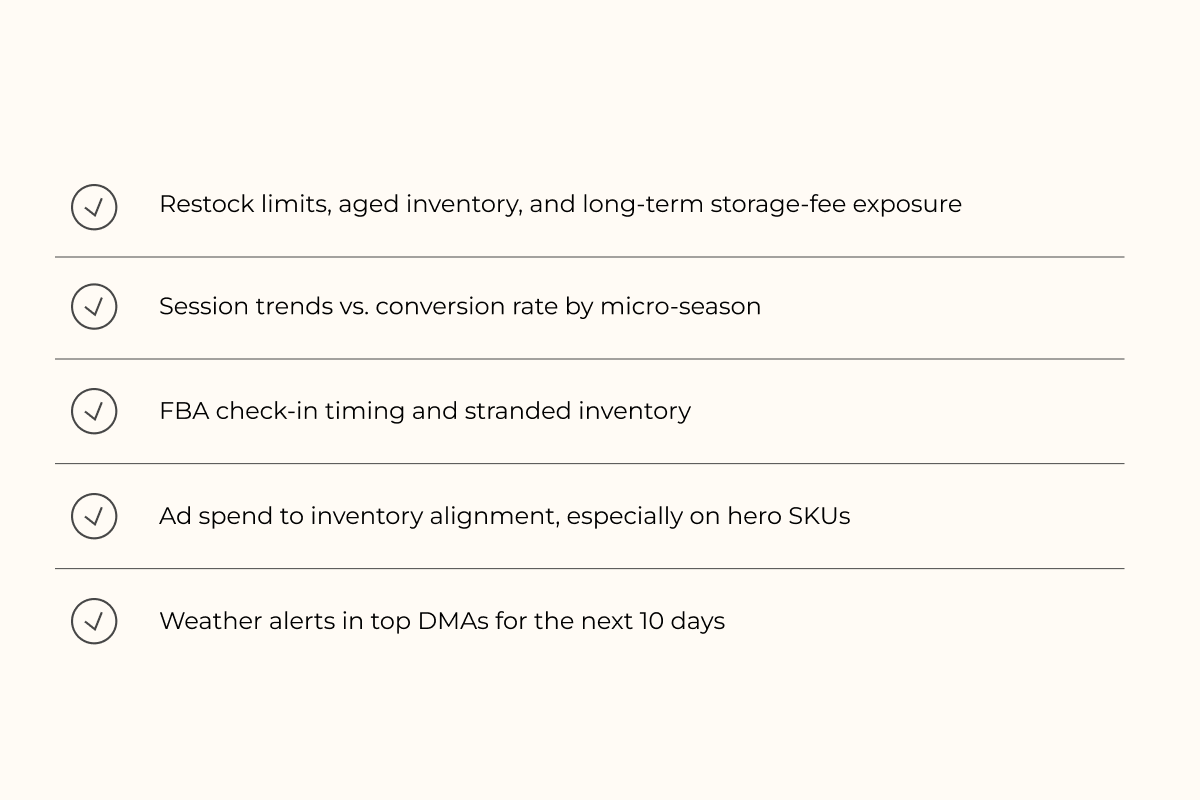
9) Ops signals you should review weekly
Winter inventory FAQs
How early should a winter brand start purchasing for peak season?
Plan primary POs in late summer, then hold a second tranche tied to early sell-through signals and weather forecasts. This protects cash while keeping options open.
What is the simplest forecast for a small team?
Use a three-layer model: baseline, promotion, and weather. Update weekly. Keep one FBM buffer for spikes while the bulk flows through FBA.
How many SKUs is too many for snow gear?
If a child ASIN fails to hit your weekly velocity threshold by the end of Early Chill, move it to limited availability or sunset it. Concentrate capital on proven winners.
How do I avoid long-term storage fees?
Right-size case packs, stagger inbound, and map inventory to micro-seasons. Create a refurb or open-box channel for January returns to recover margin.
Wrapping up
Winter rewards brands that plan in layers and move with the weather. Micro-seasons keep your strategy nimble. SKU discipline and FBA timing protect unit economics. Cash-flow tranches give you oxygen. This is what seasonal inventory-planning teams need to stay ahead of the storm and out of the warehouse weeds. If you want a plan tailored to your catalog and margins, book a call with our team and we will map the micro-seasons, the layered forecast, and the exact inbound schedule that fits your goals.
Are you ready to grow?
At Algofy Outdoors, we partner with amazing outdoor brands to provide 360° digital marketing solutions.



.png)
