


From Glamping to Tech-Enabled Camping: Marketing the New Wave of Outdoor Products
Campers have changed. Some still want the simple “sleep under the stars” vibe, but a fast-growing segment expects comfort, convenience, and gear that feels more like consumer tech than traditional equipment. Think rooftop tents with built-in lighting, portable power stations, solar chargers, GPS safety devices, heated sleep systems, and modular camp kitchens. This shift from glamping to tech-enabled camping creates a real opportunity for outdoor brands… and a real challenge: how do you market premium innovation without sounding gimmicky or overly technical?
Key takeaways
- The “new camper” buys outcomes: comfort, safety, convenience, and confidence, not specs alone.
- Premium + tech positioning needs clear category language, then a strong differentiator.
- On Amazon, your images, A+ content, and Brand Store do the heavy lifting before ads can scale.
- Trend demand is captured by pairing high-intent keywords with lifestyle creative and tight conversion paths.
- AI-informed testing helps you rotate creatives, protect ROAS, and move faster as trends shift.
Why “premium + tech” camping is a different marketing game
Glamping normalized comfort. Tech-enabled camping raised the bar again. Today’s customers comparison-shop like they would for headphones or smartwatches: they want quick clarity, proof, and credibility. They also expect a smooth buying journey across channels, from discovery to checkout.
That means your marketing has to do three things in parallel:
- Make the category obvious (What is this? What does it replace?)
- Make the value immediate (What problem disappears when I buy it?)
- Make the premium feel justified (Why it’s worth more than the “good enough” option)
If you skip step one, shoppers get confused. If you skip step three, you get price-compared into oblivion.
Positioning: sell outcomes first, then earn the right to talk specs
Most premium outdoor tech products fail in marketing for one simple reason: brands lead with features and assume the customer will connect the dots.
Flip it. Lead with outcomes, then support with proof.
A positioning template that works for smart camping gear
- Outcome headline: “Stay powered for 3 days off-grid” / “Sleep warm without bulky layers” / “Find your route and your way back.”
- Use-case clarity: weekend festival camping, overlanding, family car camping, ultralight safety kit, vanlife weekenders.
- Proof points: durability cues, certifications if applicable, warranty, real-world scenarios, and simple comparisons.
A small but important detail: avoid “tech for tech’s sake.” The best-performing creative usually makes technology feel invisible. People want the result, not a lecture.
Product storytelling for premium camping: lifestyle earns the click, details earn the sale
For tech-enabled camping, visuals and structure matter as much as copy, especially on Amazon.
Your creative stack (in priority order)
- Hero image: one clear promise (comfort, power, safety), product readable, minimal clutter
- In-context lifestyle images: show the “moment of use,” not a staged catalog vibe
- Infographic images: 3–5 core benefits in plain language
- Short video: demo + outcome + proof (fast cuts are fine, clarity matters more)
On Amazon, this combination reduces bounce, raises conversion rate, and gives ads something worth scaling.
If you want a practical reference point for performance-minded creative and campaign structure, this post is a useful companion.
Amazon: how to position tech-enabled camping products so they rank and convert
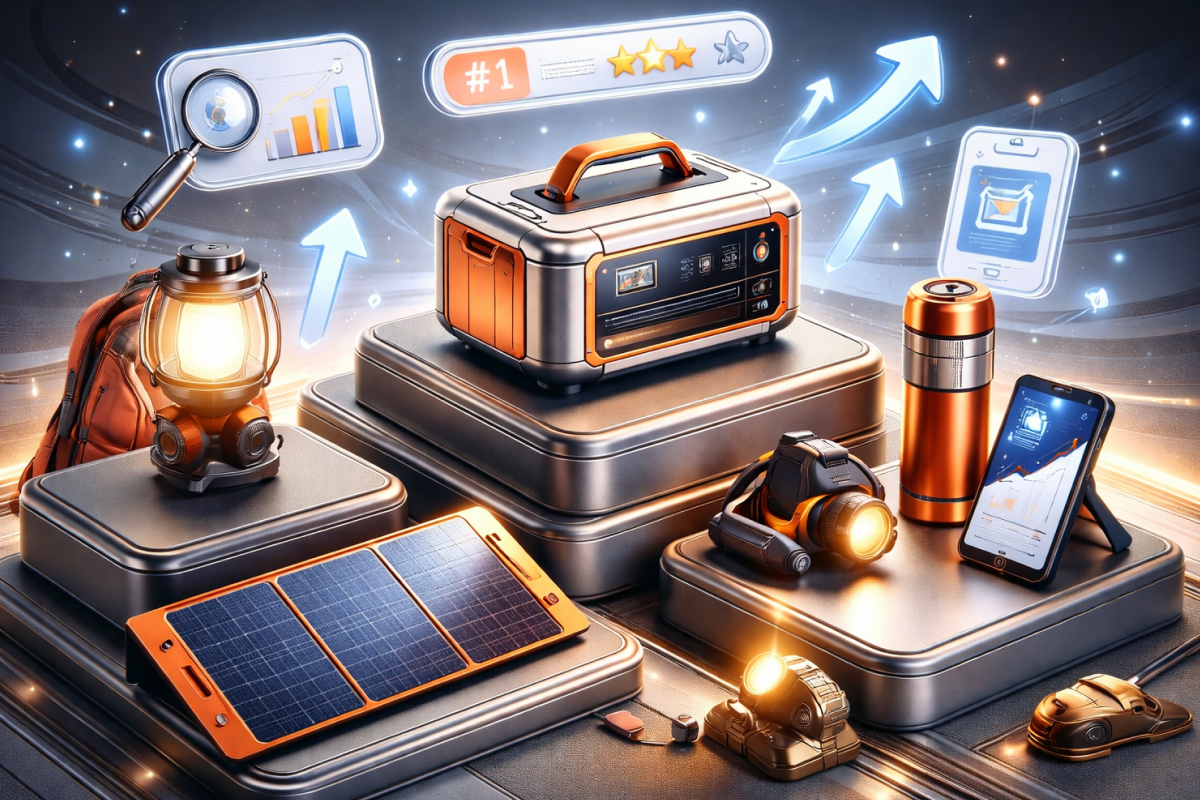
Amazon shoppers are decisive. Your job is to remove friction fast.
1) Start with “category keywords,” then layer the differentiator
Don’t bet on trendy terms only. Many shoppers still search “portable power station,” “camping solar charger,” “GPS hiking device,” or “electric cooler.” Build your foundation on high-intent category terms, then layer trend keywords like:
- tech-enabled camping gear
- smart camping essentials
- glamping gear upgrades
- off-grid camping power
- premium camping setup
2) Build an A+ content flow that answers buying questions
A+ content should read like the best salesperson on your team:
- Who is this for?
- What problem does it solve?
- What makes it different?
- What’s included?
- How do I use it quickly?
3) Brand Store = your premium showroom
If your product is premium, your Brand Store should feel premium too. Organize by use-case, not product type. “Off-Grid Power,” “Comfort Sleep System,” “Safety + Navigation,” “Weekend Glamp Setup.” It’s a subtle shift, and it works.
Ads and AI insights: capture trend demand without burning budget
Trend demand is spiky. Creative fatigue happens faster. And competitors copy angles quickly.
A reliable approach looks like this:
- Prospecting: video + lifestyle + outcome-led hooks
- Mid-funnel: comparison creatives, “what’s included,” quick demos
- Bottom-funnel: branded search, retargeting, coupon/offer timing, PDP-focused creatives
Then you test like a scientist:
- rotate 2–4 creative angles per product
- track which outcomes drive the highest CVR (comfort, safety, convenience, power)
- tighten budgets around the winning angle and the best-converting keyword clusters
This is where a blended “AI + expert team” approach matters, because optimization needs to be fast, consistent, and tied to the full funnel.
SEO and answer engines: write for questions people actually ask
For tech-enabled camping, the highest-value content often targets “decision queries,” like:
- “Is a portable power station worth it for camping?”
- “Solar tent vs. power bank, what’s better?”
- “What gear upgrades make camping more comfortable?”
- “How do I choose GPS gear for backcountry trips?”
Structure your pages with:
- clear H2s that mirror questions
- short, direct answers near the top
- scannable bullets where it helps
- FAQs that map to real objections
FAQs: Marketing tech-enabled camping products
What’s the best way to position tech-enabled camping gear?
Lead with outcomes (comfort, safety, convenience), then support with proof points and simple comparisons.
How do I market premium camping products without relying on discounts?
Invest in visuals, A+ content, and Brand Store structure. Premium sells when value is instantly obvious and credible.
Which matters more on Amazon: ads or the product page?
Your product page. Ads can scale demand, but conversion comes from images, clarity, and trust signals.
How can smaller outdoor brands compete in tech-enabled categories?
Own a specific use-case, build tight keyword clusters, and create content that answers buying questions better than larger brands.
What’s a fast win for improving conversion on premium outdoor tech?
Add one short demo video, upgrade infographic images, and rewrite the top of your listing around outcomes instead of specs.
Conclusion: make innovation feel simple, then scale it
The shift from glamping to tech-enabled camping is bigger than a trend. It’s a new expectation: customers want the outdoors, plus comfort and confidence. Brands that win here don’t overwhelm shoppers with features. They translate innovation into outcomes, prove it visually, and build a conversion-first path across Amazon and DTC.
If you’re building or scaling premium outdoor products and want a full-funnel plan that connects creative, SEO, and performance, then book a call with our team to map the fastest route to efficient growth.
Are you ready to grow?
At Algofy Outdoors, we partner with amazing outdoor brands to provide 360° digital marketing solutions.
.png)
